If someone mentioned a ‘PICC line’ in passing and moved straight on to the next thing, you aren’t the first person to leave an appointment nodding along while quietly wondering what you just agreed to.
Here’s the simple breakdown: a PICC line is a thin, soft tube placed in your upper arm and guided into a large vein near your heart. It gives your medical team a single, reliable access point for chemotherapy, fluids, and blood draws saving you from a fresh needle stick every single visit. It can stay in place for weeks or months, lets you go about most of your daily routine, and only requires maintenance once a week from a nurse. This guide walks you through why it’s used, what placement day feels like, key risks to know about, and the warning signs that mean you should call your doctor right away.
Demystifying the PICC Line: What It Is and Why It’s Used
PICC stands for peripherally inserted central catheter, which neatly describes what it does. Peripherally inserted means it goes in at the edge of your body, usually a vein just above the bend of your elbow. Central means where it ends up: a large, fast-flowing vein just above your heart.
That destination is the whole point. Chemotherapy drugs are often harsh on small veins, and some are classified as vesicants, meaning they can cause serious damage if they leak into surrounding tissue. Delivering them into a wide, high-flow vein dilutes them almost instantly and protects the smaller veins in your hands and arms from damage.
Your care team might recommend a PICC line if:
- Your treatment is long-term: If you need therapy over several weeks or months, a PICC line spares your veins from constant, painful needle sticks.
- Your medications are harsh on veins: Many chemotherapy drugs, specialized antibiotics, and IV nutrition can irritate or damage smaller hand and forearm veins.
- You need regular blood tests: Blood draws can often be taken directly from the line rather than requiring a fresh needle every time.
- Your veins are hard to find: If past treatments or frequent IVs have made your veins tricky to access (“hard stick”), a PICC offers a guaranteed, reliable port.
- You’re continuing treatment at home: It provides a safe, easy way to receive fluids, nutrition, or medications on an outpatient basis.
A PICC line contains one, two, or three separate channels, called lumens, running inside a single tube. Multiple lumens allow your medical team to give you different medications or fluids at the exact same time without them mixing beforehand, or to draw blood while a treatment is running.
From Placement to Removal: What to Expect
Placement day is usually far less intimidating than most people anticipate. The procedure takes roughly 30 to 60 minutes in a radiology room or at your bedside, and relies on a local anesthetic rather than general anesthesia.
- Numbing the site: A specialist nurse or doctor uses ultrasound to locate the best vein in your upper arm, then thoroughly numbs the area. You’ll feel a brief sting from the numbing shot, but not sharp pain during the insertion itself.
- Placing the line: You remain awake throughout the process. As the catheter is threaded into position, most people describe feeling slight pressure or a light pushing sensation rather than pain.
- Verifying the position: Before the line is ever used, the team confirms the tip is in the exact right spot using a quick chest X-ray or an ECG-guided tracking system.
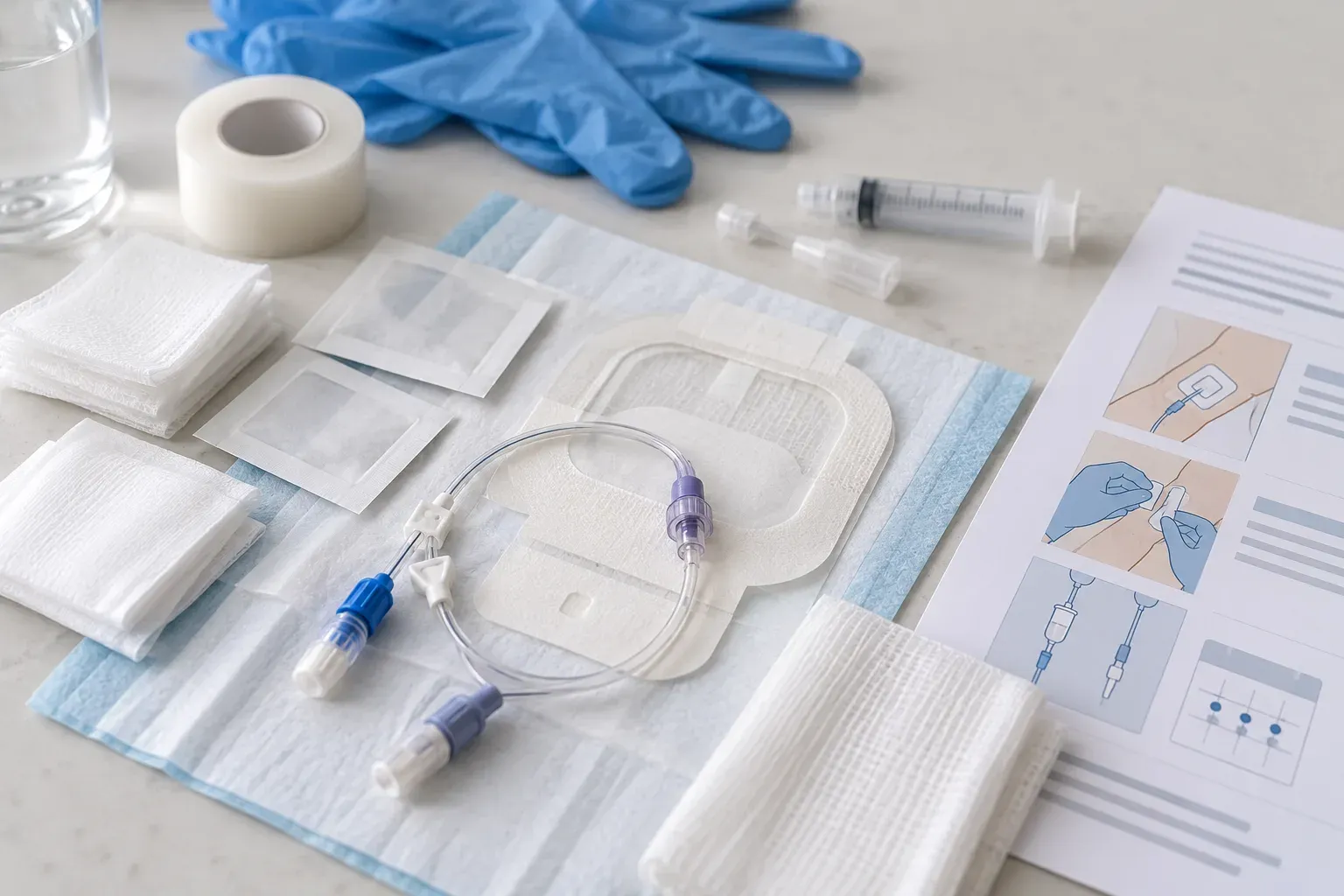
Once inserted, a securing device and a clear, waterproof dressing hold the catheter firmly in place. A few inches of tubing remain outside your arm, fitted with removable caps where medications, fluids, or blood draw syringes connect.
How long does it stay in? It depends entirely on your specific treatment plan. A PICC line can safely remain in place for weeks to months—and at many cancer centers, for the better part of a year—provided it functions well and is properly maintained.
What is removal like? Removal is surprisingly quick and straightforward, with no surgery required. A nurse simply removes the clear dressing and gently slides the catheter out of your arm, which takes less than two minutes. They then apply light pressure and a small bandage. Most patients say the process feels like a strange sliding sensation rather than pain.
Understanding the Risks: Infection, Clots, and Blockages
This next section is worth paying attention to—not because complications are common, but because catching early warning signs makes resolving them simple and straightforward.
Infection: Since a PICC line leads directly to a major vein, keeping the site sterile is critical to prevent bacteria from entering your bloodstream. Depending on health factors and treatment length, studies show infection rates range from 7% to around 12%. This is precisely why your weekly dressing changes are kept strictly sterile and why the line caps are scrubbed before every single use. Most importantly, it’s why a new fever should never be monitored at home; it requires an immediate call to your clinic.
Blood Clots: This is a section where the numbers can look alarming until you understand what they actually mean. If researchers run ultrasound scans on every single patient with a PICC line, they find small, asymptomatic clots in 50% to 60% of people within the first two weeks. However, the overwhelming majority of these cause zero harm and never require treatment. Clots that actually cause noticeable symptoms affect only about 5% to 7% of patients. Both numbers are accurate; they just measure two very different things. For you, the key is simply knowing what symptoms to watch for so your team can handle them if they arise.
Blockage: Over time, a PICC line can become partially or fully clogged; medical teams call this an occlusion. This usually happens when a tiny blood clot forms at the internal tip or if the tubing kinks outside your arm, affecting roughly 7% of patients. Fortunately, a blocked line doesn’t automatically mean you need a new one; nurses can often clear it easily with a specialized clot-dissolving medication. The golden rule: never force a flush if you feel resistance, as pushing too hard can damage the tubing or dislodge a clot.
Dislodgement: A PICC line can accidentally pull out of place if it catches on clothing, shifts while you sleep, or snags on a loose dressing. While a dislodged line can usually be repositioned or replaced, preventing it is easy: keep the tubing secured under a sleeve or cover, and never use scissors near your arm when trimming tape or bandages.
Living With a PICC: Showers, Sleep, and Everyday Life
Most people adapt to having a PICC line much faster than they expect. Once the insertion site heals, you can go back to work, enjoy light exercise, maintain intimacy, sleep in whatever position feels comfortable, and carry on with daily life. The goal of a PICC line is to make your treatment easier and not to put your life on hold.
Weekly Care & Maintenance
- Professional Care: Your clear dressing, end cap, and securing device are changed once a week by a nurse (either at your clinic or via home health). Some patients are trained to handle this at home, but most leave it to their care team.
- When to Change Early: The dressing must be replaced immediately if it gets wet, loose, dirty, or if blood pools underneath it.
- Flushing Schedule: To prevent blood from clotting inside the tube, the line is flushed with sterile saline before and after every use. If you aren’t using the line daily, your team will give you a specific flushing schedule based on your catheter model.
Showering & Daily Hacks
- Showering: You can shower safely as long as the entire site is covered in a waterproof seal or specialized sleeve. Face away from the direct water stream, and inspect the dressing immediately after to ensure no water snuck inside.
- Patient Pro-Tip: Cut the foot off a long tube sock and slide the remaining elastic band over your upper arm. It holds loose tubing flush against your skin so it doesn’t snag on clothing.
Crucial Rules: What to Avoid
- No Submerging: Never take baths with your arm submerged, and avoid swimming pools, hot tubs, or ocean water.
- No Blood Pressure Cuffs: Always take blood pressure readings on the opposite arm to protect the catheter.
- No Heavy Lifting or Strenuous Motion: Avoid lifting heavy objects (usually anything over 5 to 10 lbs) or doing repetitive arm motions like scrubbing or playing tennis.
- No Scissors: Never use scissors near your arm to trim loose tape or bandage edges.
- No Creams or Lotions: Keep all skin products away from the insertion site and surrounding dressing.
PICC or Port? Understanding the Choice
If your team recommended a PICC line, it is completely fair to wonder why that choice was made over an implanted port, which sits entirely beneath the skin on your chest.
From a purely statistical standpoint, research often favors ports for lower overall complication rates. A major clinical trial comparing access devices in cancer patients found complications in 32% of patients with ports versus 47% of those with PICCs. Specifically, ports showed lower rates of:
- Bloodstream infections: 6% for ports vs. 16% for PICCs
- Blood clots (venous thrombosis): 2% for ports vs. 11% for PICCs
- Mechanical failures: 3% for ports vs. 11% for PICCs
So why are PICC lines so widely used?
Because statistics are only part of the story. A PICC line can be placed the same day at your bedside without surgery, and it can be removed in under two minutes if an issue arises. In contrast, an implanted port requires a minor surgical procedure to insert, another surgery to remove, and still requires a needle stick through the skin every time it is accessed.
For shorter treatment plans, urgent starts, or patients who want to avoid surgery, a PICC line is often the practical, effective choice.
This is always a personalized medical decision rather than a one-size-fits-all answer. If you are curious about your options, ask your oncologist directly: “Why is this specific device the best fit for my treatment plan right now?”
Your Next Steps: Red Flags and Questions to Ask
Red Flags: When to Contact Your Care Team
While PICC lines are safe and widely used, prompt attention to warning signs makes all the difference. Contact your oncology team or line nurse the same day if you notice:
- Signs of Infection: A fever or chills (especially soon after flushing or using the line), or redness, warmth, pain, or discharge at the insertion site.
- Signs of a Blood Clot: Swelling or aching in your arm, shoulder, neck, or face, or new, prominent veins appearing across your chest.
- Mechanical Issues: Resistance when flushing (never force fluid through), fluid leaking, cracks in the tubing, or the line slipping further out of your arm.
- Dressing Problems: Any loose, peeling, or missing dressing that leaves the insertion site exposed to air.
🚨 Emergency Warning: Go to the nearest emergency department immediately if you experience sudden chest pain, a racing heart, or shortness of breath.
5 Questions to Ask Before Leaving the Clinic
Before you head home after placement, make sure you have answers to these essential questions:
- “Why a PICC line rather than an implanted port for my specific treatment plan?”
- “How many weeks or months do you expect I will need this line in place?”
- “Who manages my weekly dressing changes, where will they happen, and how do I schedule them?”
- “Can all of my routine blood draws and CT scan contrast be given directly through this line?”
- “Who do I call after hours or on weekends if I notice a problem with my line?”
A Final Reassurance
A PICC line almost always looks far more intimidating on day one than it feels to live with day-to-day. For most people, it quietly eliminates one of the most exhausting parts of ongoing medical care: the frustrating, painful search for a usable vein at every single appointment.
Within two or three weeks, your care routine will feel like second nature. Remember that while complications are possible, they are manageable, and often easily fixed, when caught early. Never hesitate to reach out to your team; that is precisely what they are there for.
This page describes PICC lines in general terms. Catheter types, flushing schedules, dressing products, and activity advice differ between cancer centers and between individual devices, so your own team’s written instructions always take priority over anything here. Nothing on this page is a substitute for the training your nurse provides before you go home with a line. If you are unsure whether a symptom matters, contact your care team rather than waiting for your next scheduled appointment.
Common questions
How long can a PICC line stay in?
It depends on your treatment plan. A PICC line can stay in place for weeks to months, and at many cancer centers for the better part of a year, as long as it works well and is properly maintained.
Can I shower with a PICC line?
Yes, as long as the entire site is covered with a waterproof seal or specialized sleeve. Face away from the direct water stream and check the dressing afterward. Never submerge the arm: no baths with the arm underwater, and no swimming pools, hot tubs, or ocean water.
Does it hurt to have a PICC line removed?
Removal needs no surgery. A nurse takes off the clear dressing and gently slides the catheter out of your arm, then applies light pressure and a small bandage. Most people describe a strange sliding sensation rather than pain.
When should I call my care team about my PICC line?
The same day if you notice a fever or chills, redness, warmth, pain, or discharge at the insertion site, swelling or aching in your arm, shoulder, neck, or face, resistance when flushing, leaking or cracked tubing, the line slipping out, or a loose or missing dressing. Go to the nearest emergency department for sudden chest pain, a racing heart, or shortness of breath.
Why would my team choose a PICC line instead of a port?
Studies often favor ports for lower overall complication rates, but a PICC line can be placed at the bedside without surgery and removed quickly, while a port needs a minor operation to put in and another to take out. For shorter treatment plans, urgent starts, or people who want to avoid surgery, a PICC is often the practical choice. Ask your oncologist why a specific device fits your plan.
Sources
- About Your Peripherally Inserted Central Catheter (PICC) · Memorial Sloan Kettering Cancer Center, 2025
- Caring for Your Peripherally Inserted Central Catheter (PICC) · Memorial Sloan Kettering Cancer Center, 2014
- Care of your PICC (Peripherally Inserted Central Catheter) · Cambridge University Hospitals NHS Foundation Trust, 2025
- Complication Rates Among Central Venous Access Devices Compared · The ASCO Post, 2021
- Complication rates of peripherally inserted central catheters vs implanted ports in patients receiving systemic anticancer therapy · International Journal of Cancer, 2023 · doi:10.1002/ijc.34612
- Thrombosis and infections associated with PICC in onco-hematological patients, what is their relevance? · Clinical and Translational Oncology, 2024 · doi:10.1007/s12094-024-03548-8
- Implantable Ports vs Peripherally Inserted Central Catheters in Breast Cancer Chemotherapy: A Comprehensive Meta-Analysis · Medical Science Monitor, 2025 · doi:10.12659/MSM.949000
- Peripherally inserted central catheters versus implantable port catheters for cancer patients: a meta-analysis · Frontiers in Oncology, 2023 · doi:10.3389/fonc.2023.1228092
- FAQs about Caring for Your PICC Line · National Jewish Health, 2019
- PICC and Midline Care Instructions · Cheyenne Regional Medical Center, 2022